Photogrammetry is the science of deriving precise measurements and three-dimensional geometry from photographs — turning flat images into spatially accurate models of the real world. The discipline dates back to the mid-1800s but has been radically transformed by drone hardware, cloud computing, and modern algorithms. Today, photogrammetry powers everything from topographic surveys and construction site documentation to crash reconstruction, insurance claims, and digital twin creation. This guide explains how photogrammetry works, covers its major types — including the video-based extension called videogrammetry used by platforms like SkyeBrowse — and surveys the industries putting it to work right now.
Key Takeaways
- Photogrammetry derives real-world measurements from overlapping photographs by calculating where the same physical point appears across multiple images taken from different positions.
- The four main types — aerial, terrestrial, close-range, and videogrammetry — share the same geometric principles but differ in platform, subject scale, and capture method.
- Modern drone photogrammetry software can generate a georeferenced 3D model, orthomosaic, and point cloud from a single flight in under an hour with no desktop hardware required.
- Accuracy is set mainly by ground sample distance, overlap, image sharpness, and georeferencing, and it tightens as the camera gets closer; SkyeBrowse video-based models reach 0.5 inch (Commercial and Pro) or 0.1 inch (Public Safety & Enterprise).
- Photogrammetry and LiDAR both produce survey-grade point clouds; photogrammetry adds true color at lower hardware cost, while LiDAR's distinct edge is reaching ground under vegetation.
- Videogrammetry extends traditional photogrammetry by using continuous video rather than discrete still frames, letting operators capture a scene by simply flying or walking with a camera and uploading the footage.
Contents
- What is the photogrammetry definition?
- How does photogrammetry work?
- What are the types of photogrammetry?
- How accurate is photogrammetry, and what drives accuracy?
- What is the difference between photogrammetry and LiDAR?
- What are the advantages and disadvantages of photogrammetry?
- What industries use photogrammetry today?
- How does videogrammetry extend traditional photogrammetry?
- FAQ
What is the photogrammetry definition?
Photogrammetry is the science of making measurements and 3D reconstructions from photographs. By analyzing how the same physical point appears across multiple overlapping images captured from different positions, software calculates real-world coordinates, distances, and surface geometry without any physical contact. The American Society for Photogrammetry and Remote Sensing (ASPRS) defines it as "the art, science, and technology of obtaining reliable information about physical objects and the environment through the process of recording, measuring, and interpreting photographic images."
The word itself is derived from three Greek roots: photos (light), gramma (something written or drawn), and metron (to measure) — literally, "light-written measurement." The ASPRS has maintained the definitive professional standards for photogrammetric practice since 1934, and its Manual of Photogrammetry remains the canonical technical reference for practitioners.
A related term you will encounter frequently is "photogrammetric," the adjective form — as in "photogrammetric mapping," "photogrammetric survey," or "photogrammetric reconstruction." When search queries use "what is photogrammetric," they are almost always asking about the same underlying discipline.
Photogrammetry is often discussed alongside remote sensing, LiDAR, and structured-light scanning. The key distinction is that photogrammetry uses ordinary photographic imagery — visible-light photographs taken by standard cameras — as its raw input, making it accessible to any operator with a camera-equipped drone or smartphone.
How does photogrammetry work?
Photogrammetry works by identifying the same physical point in multiple overlapping photographs and using the known geometry of the camera to triangulate that point's position in three-dimensional space. Modern software extends this with Structure from Motion (SfM) algorithms, which simultaneously solve for camera positions and 3D scene geometry from an unordered image set — no pre-calibrated camera rig required.
A photogrammetry project moves through six stages, and each one feeds the next, so a weak capture cannot be rescued in processing:
1. Plan the capture. Start from the accuracy the deliverable needs and work back to a ground sample distance (the real-world size of one pixel), then to the altitude or camera distance that delivers it. For aerial grid missions, this is also where overlap is set, typically 70–80% front overlap and 60–70% side overlap.
2. Capture overlapping images. Every surface needs to appear in several images taken from different positions. Straight-down (nadir) images cover open ground well; angled (oblique) images around buildings, vehicles, and other structures fill in walls, overhangs, and undersides that a nadir pass misses.
3. Align images and reconstruct sparse geometry. The software detects thousands of distinctive features (corners, edges, texture patterns) in each image and matches them across the set. From those matches it estimates each camera's position and orientation, then refines cameras and 3D points together in a step called bundle adjustment, which minimizes the gap between where each point should appear and where it actually appears in every photo. The result is a sparse point cloud, a skeleton of the scene.
4. Georeference and scale the model. Ground control points (surveyed markers with known coordinates), RTK or PPK positions recorded by the drone, or GPS telemetry embedded with the imagery tie the model to real-world coordinates and true scale. Imagery with no position data can still be scaled from one known measurement in the scene.
5. Dense reconstruction. With camera positions fixed, the software computes depth for nearly every pixel and fuses the results into a dense point cloud containing millions or billions of points. This is the foundation for every deliverable that follows.
6. Build meshes, orthomosaics, and exports. The dense cloud is meshed into a continuous 3D surface and textured with pixels from the source images, producing a photorealistic model. The software also projects the imagery onto a flat plane to create an orthomosaic, a geometrically corrected top-down map suitable for measurement and GIS work. Point clouds, meshes, and orthomosaics then export to GIS, CAD, and BIM tools.
The USGS National Geospatial Program relies on photogrammetric mapping as a core method for producing topographic data across the United States.
What are the types of photogrammetry?
The four major types of photogrammetry are aerial photogrammetry (camera mounted on aircraft or drone, capturing wide areas from above), terrestrial photogrammetry (camera on the ground pointing at a distant scene), close-range photogrammetry (camera very close to the subject, used for objects or small structures), and videogrammetry (video footage rather than still frames as the image source). All share the same geometric principles; they differ in platform, scale, and capture method.
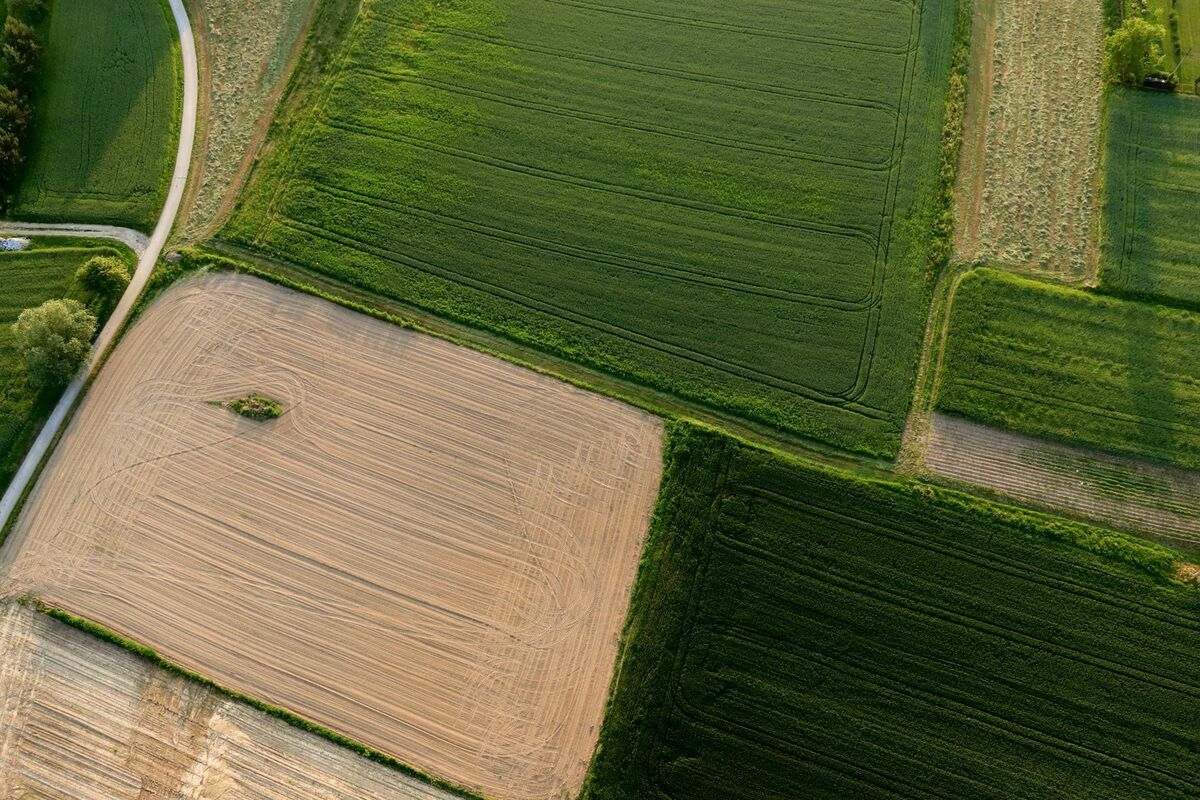
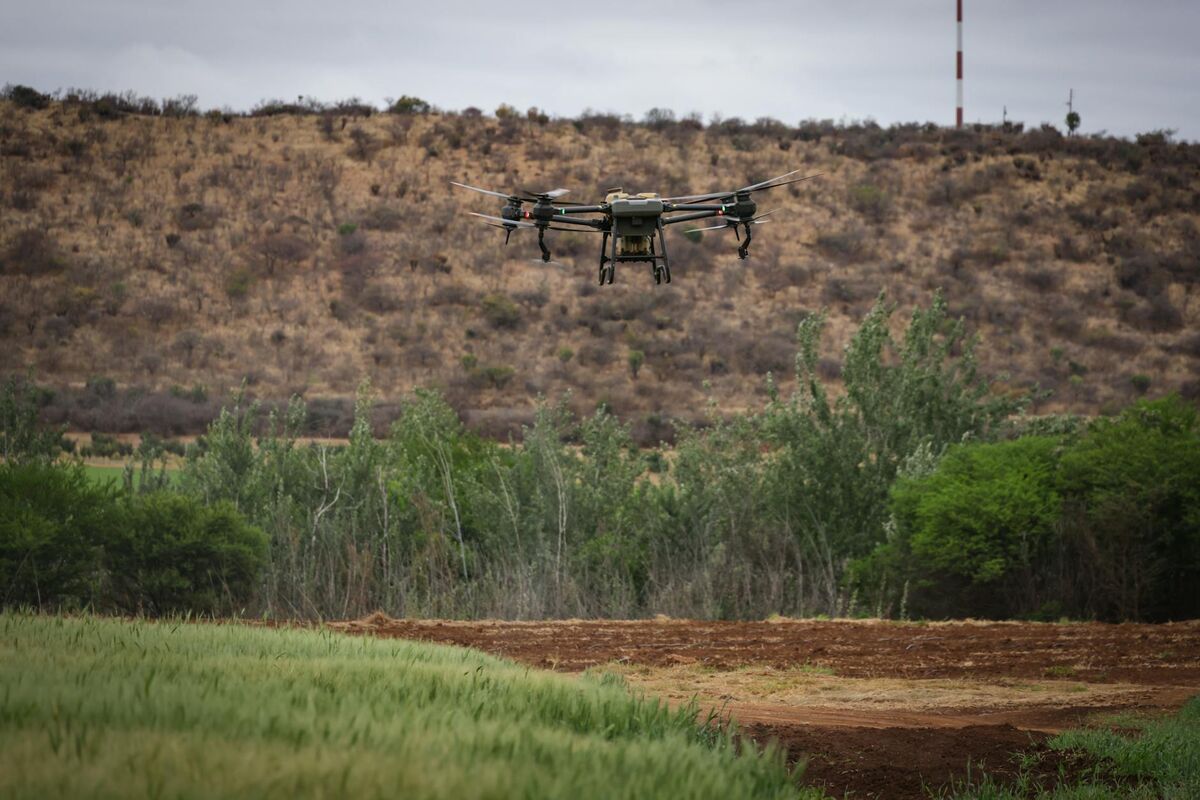
Aerial photogrammetry is the most widely deployed type today, driven by the explosion of consumer and enterprise drone hardware. A drone flies a pre-planned grid or orbit pattern over the target area, capturing overlapping still images or video. The outputs — point clouds, orthomosaics, and 3D meshes — are used for land surveying, construction progress monitoring, infrastructure inspection, and emergency response mapping. For a detailed look at the capture and software workflow, see the drone 3D mapping guide.
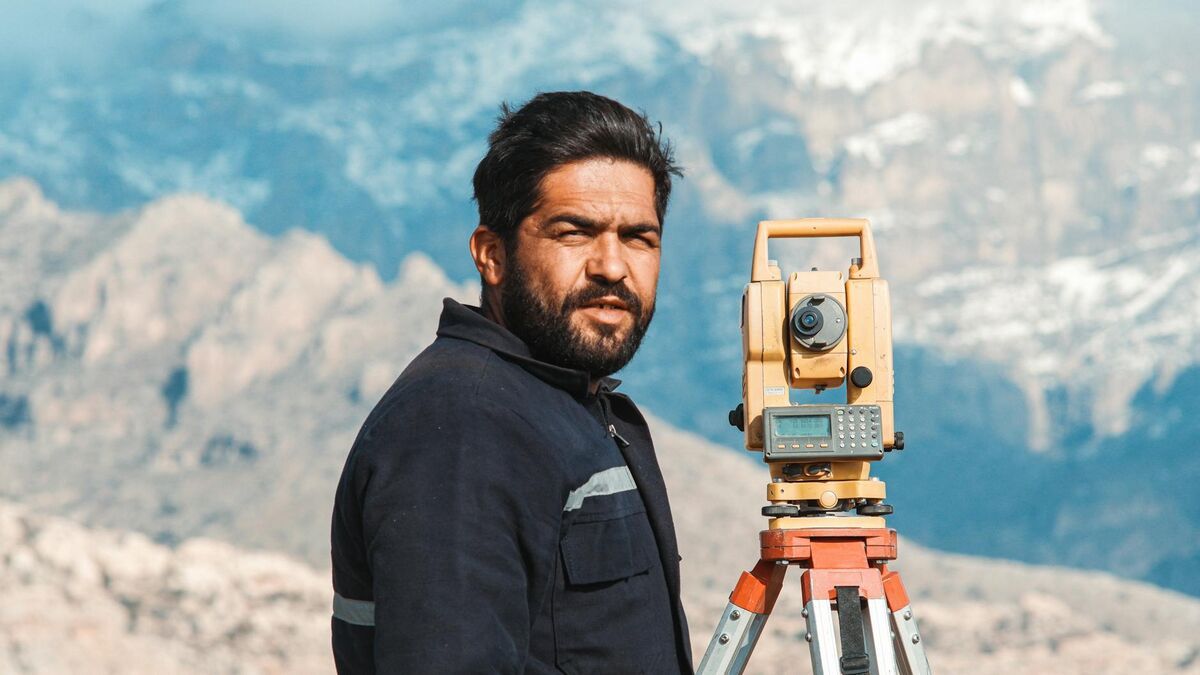
Terrestrial photogrammetry positions the camera on a tripod or handheld mount at ground level, directed at a distant subject such as a building facade, cliff face, or archaeological excavation. This type produces highly accurate surface models of vertical or angled subjects that aerial capture cannot reach from above. It is common in forensic engineering, heritage documentation, and structural inspections.
Close-range photogrammetry brings the camera within a few meters — or even centimeters — of the subject. Industrial applications include dimensional quality control on manufactured parts, deformation monitoring of structures, and 3D digitization of artifacts for museum collections.
Videogrammetry is the video-native extension of photogrammetry. Instead of requiring an operator to manually trigger individual shots with specific overlap, the system samples frames from a continuous video stream. This dramatically lowers the skill barrier for capture: operators fly or walk while recording, then submit the footage to a processing platform. Videogrammetry is particularly well-suited to time-critical environments — crash scenes, fire scenes, and active construction sites — where replanning and reflying individual photo passes is not practical.
The four types side by side:
| Type | Camera position | Typical distance to subject | Common outputs | Typical uses |
|---|---|---|---|---|
| Aerial | Drone or crewed aircraft, looking down or at an angle | 30–120 m for drones; much higher for crewed aircraft | Orthomosaics, surface models, point clouds, meshes | Surveying, construction, crash and fire scenes |
| Terrestrial | Tripod or handheld at ground level | Several meters to hundreds of meters | Facade models, point clouds | Building facades, cliffs, excavations, forensic engineering |
| Close-range | Handheld camera, phone, or fixed rig | Centimeters to a few meters | High-detail meshes, dimensional measurements | Parts inspection, artifacts, evidence items, vehicle damage |
| Videogrammetry | Any of the above, recording video | Any of the above | Same outputs as photo-based capture | Time-critical scenes, interiors, fast field capture |
A fifth variant, satellite photogrammetry, applies the same stereo principles to pairs of satellite images and is mainly used for regional elevation models where a drone or aircraft cannot fly.
How accurate is photogrammetry, and what drives accuracy?
Photogrammetry is accurate enough for survey-grade mapping, engineering, and courtroom evidence when the capture is done well. Accuracy is driven mainly by ground sample distance, image overlap and sharpness, camera calibration, and georeferencing with ground control points or RTK positioning. Because accuracy scales with distance to the subject, flying lower or moving the camera closer tightens results to fractions of an inch.
Two kinds of accuracy are worth separating. Relative accuracy describes how well distances and areas measured inside the model match reality, and it tracks ground sample distance and image quality closely. Absolute accuracy describes how closely the model sits to true map coordinates, and it depends on ground control points, RTK/PPK positioning, or other georeferencing. The ASPRS Positional Accuracy Standards for Digital Geospatial Data define accuracy classes by root-mean-square error (RMSE) against independent checkpoints, which is the benchmark professional deliverables are tested against.
| Factor | What it controls | How to improve it |
|---|---|---|
| Ground sample distance | The finest detail the model can resolve | Fly lower, use a longer lens or a higher-resolution sensor, move the camera closer |
| Image overlap | How many views confirm each point | Plan 70–80% front and 60–70% side overlap for grids; continuous video overlaps automatically |
| Sharpness and exposure | How reliably features match between images | Faster shutter, slower flight, even lighting |
| Camera geometry | Lens distortion and focal-length errors | Self-calibration during processing, fixed focus, a mix of nadir and oblique views |
| Georeferencing | Where the model sits on the map | Ground control points, RTK/PPK, GPS telemetry |
| Surface texture | Whether blank or shiny surfaces reconstruct | Capture at angles that avoid glare; add markers on featureless surfaces |
Distance is the biggest lever. A DJI Mavic 3 Enterprise flying at 100 m resolves about 2.7 cm per pixel; drop to 37.5 m and the same camera resolves 1 cm. A phone camera recording 4K video from about 1.5 m away resolves roughly half a millimeter per pixel, which is why close-range capture of a vehicle, a room, or an evidence item delivers finer detail than any high-altitude pass.
SkyeBrowse applies the same principle to video. Commercial and Pro models use 8K processing for 0.5 inch accuracy, and Public Safety & Enterprise models use 16K Ultra processing for 0.1 inch accuracy, survey-grade results without GCPs or a specialist. In an independent accuracy study by AirBorne Works (January 2021), SkyeBrowse video models came closest to Leica BLK360 laser-scan ground truth on 8 of 9 measurements, outperforming photo-based Pix4D Mapper and Leica BLK3D. When a deliverable must be tied to certified survey coordinates, adding GCPs or RTK positioning handles the georeferencing; the measurement accuracy inside the model comes from the capture itself.
What is the difference between photogrammetry and LiDAR?
Photogrammetry measures a scene by triangulating matched points across overlapping images, while LiDAR (Light Detection and Ranging) measures distance directly by timing laser pulses that bounce off surfaces. Both produce survey-grade point clouds when captured correctly. Photogrammetry adds true-color texture at a fraction of the hardware cost, while LiDAR's distinct strength is reaching the ground through gaps in vegetation.
The accuracy drivers differ. Photogrammetry precision scales with ground sample distance and capture distance, so it improves every time the camera moves closer. LiDAR precision depends on the sensor's ranging precision, the quality of its GNSS and inertial trajectory, and point density. The USGS 3D Elevation Program uses airborne LiDAR for national bare-earth elevation data because forests hide the ground from cameras; for open sites, structures, roadways, and scenes, photogrammetry and videogrammetry deliver the same measurement quality with color included.
Here is how the three methods compare, with more detail in our LiDAR vs photogrammetry comparison and drone LiDAR guide:
| Factor | Photogrammetry | LiDAR | Videogrammetry |
|---|---|---|---|
| Source data | Overlapping still photos | Laser pulse returns | Continuous video frames |
| Accuracy | Survey-grade; scales with GSD and capture distance | Survey-grade; scales with ranging precision and trajectory quality | Survey-grade; scales with capture distance |
| Hardware cost | Low (any camera) | High (laser scanner) | Low (any video camera) |
| Output texture | Photorealistic color | Geometry only unless paired with a camera | Photorealistic color |
| Vegetation penetration | Poor | Excellent | Poor |
| Capture skill required | Moderate (overlap planning) | Moderate | Low (just record) |
| Best for | Low-cost textured 3D models | Bare-earth mapping under canopy | Fast, time-critical scenes |
Videogrammetry, covered in detail below, keeps photogrammetry's low-cost, photorealistic strengths while removing the overlap planning that is one of its biggest practical burdens.
What are the advantages and disadvantages of photogrammetry?
Photogrammetry's main advantages are low cost, photorealistic textured output, and accessibility — any camera-equipped drone or smartphone can capture data, with no specialized laser hardware required. Its limitations are dependence on adequate lighting and surface texture, reduced accuracy through vegetation canopy, and sensitivity to image overlap and capture quality. For texture-rich subjects in good light, photogrammetry rivals far more expensive scanning methods; for bare-earth mapping under dense canopy, LiDAR remains superior.
Advantages of photogrammetry
- Low equipment cost. A standard camera or off-the-shelf drone is the only capture hardware required — no laser scanner or specialized sensor payload.
- Photorealistic output. Because the source data is ordinary imagery, the resulting 3D models and orthomosaics carry true-color texture, making them readable as visual evidence as well as measurement data.
- Accessibility and scale. Any operator who can fly a drone or hold a phone can capture a scene, and cloud processing removes the need for high-end desktop hardware.
- Rich measurement data. A single capture yields point clouds, meshes, orthomosaics, and volumetric measurements from one dataset.
Disadvantages of photogrammetry
- Lighting and texture dependent. Flat, reflective, or untextured surfaces (still water, glass, fresh snow) produce gaps because the software cannot match features across images.
- Limited vegetation penetration. Unlike LiDAR, photogrammetry cannot see through tree canopy to capture bare-earth terrain beneath foliage.
- Capture-quality sensitive. Insufficient image overlap, motion blur, or inconsistent exposure degrades accuracy and can force a reflight.
- Processing time on large datasets. Very large or high-resolution captures require meaningful compute, though cloud platforms now absorb most of this burden.
What industries use photogrammetry today?
Photogrammetry is in active use across construction, public safety, land surveying, insurance, archaeology, agriculture, and infrastructure inspection. The common thread is any workflow that requires accurate spatial measurements or 3D documentation of a physical environment — faster and safer than manual measurement, and more spatially complete than photographs alone.
Construction and civil engineering. Project owners use drone photogrammetry to track earthwork volumes, verify as-built conditions against design models, and document progress for lender draws. A weekly orthomosaic over a large excavation site captures stockpile volumes and grade changes that would take a survey crew days to measure on foot.
Public safety and law enforcement. Police departments, fire investigators, and accident reconstructionists use photogrammetry to document scenes before evidence is cleared. A 3D model of a crash scene or fire origin can be shared with prosecutors, defense counsel, and expert witnesses without requiring anyone to revisit the location. Drone mapping software purpose-built for this workflow can close a major highway faster by compressing scene documentation from hours to minutes.
Land surveying. Drone photogrammetry has become a standard supplement to traditional ground surveying. The USGS National Map and similar national mapping agencies use aerial photogrammetry to maintain topographic datasets at national scale. Private surveyors use drone photogrammetry for boundary surveys, volume calculations, and corridor mapping on infrastructure projects.
Insurance and property claims. Adjusters use drone photogrammetry to document storm damage, roof conditions, and property loss without physically accessing unsafe structures. A georeferenced 3D model provides defensible spatial evidence for coverage decisions and dispute resolution.
Archaeology and cultural heritage. Photogrammetric documentation of excavation trenches, monuments, and artifacts creates permanent 3D records before material is disturbed or removed. For current developments across these fields, the photogrammetry news roundup tracks software releases, regulatory changes, and industry case studies.
How does videogrammetry extend traditional photogrammetry?
Videogrammetry is the practice of deriving 3D geometry from video footage rather than a discrete set of still photographs. It applies the same Structure from Motion and dense reconstruction algorithms as traditional photogrammetry, but uses frames sampled from a continuous video stream as the image input. The practical benefit is a simpler, faster capture workflow: operators record video during a standard flight or walkthrough, then upload the file to a cloud platform for processing — no shot-by-shot planning required.
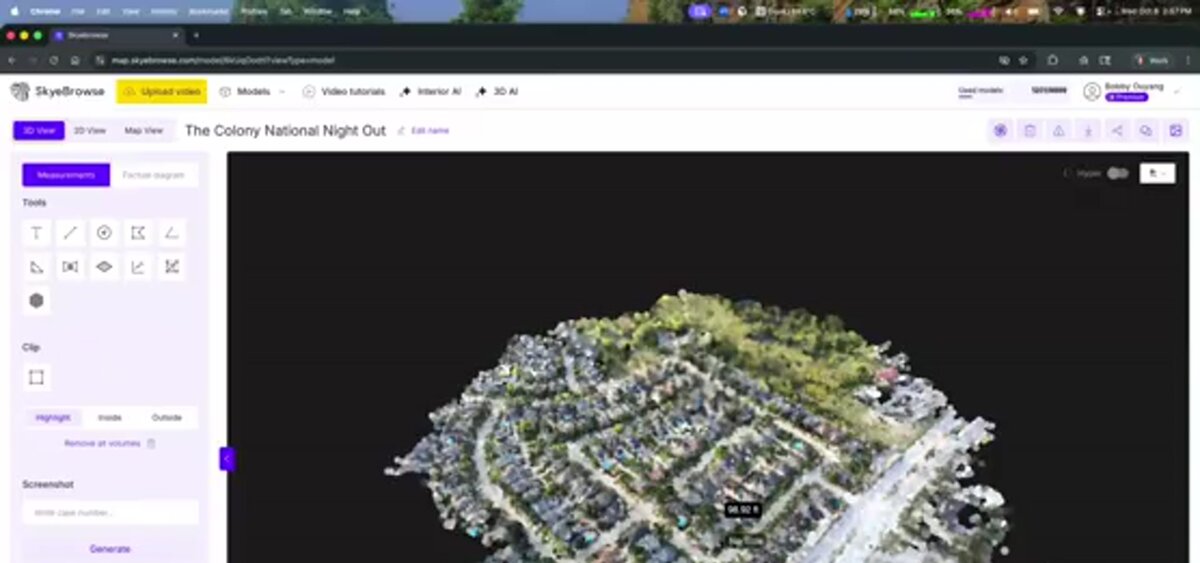
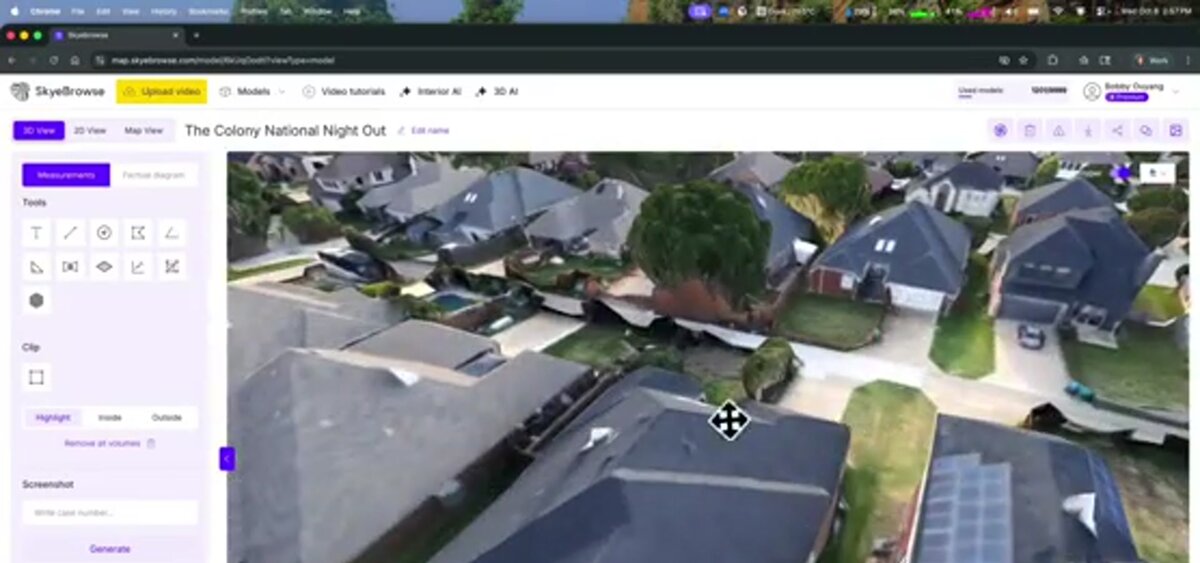
SkyeBrowse is a cloud-based videogrammetry platform built specifically for time-sensitive documentation. Operators upload an .MP4 or .MOV file — captured from any supported drone or handheld camera — to app.skyebrowse.com. The platform pairs the video with telemetry data (.SRT files from DJI drones or .ASS files from Autel drones) for accurate georeferencing, then processes the footage into a deliverable 3D model without requiring the operator to manage individual frame selection or overlap calculations.
Accuracy depends on the processing tier and on how close the capture gets. Commercial and Pro models use 8K processing for 0.5 inch accuracy, suited to construction, insurance, and site documentation. Public Safety & Enterprise models use 16K Ultra processing with AI Moving Object Removal for 0.1 inch accuracy, the tier built for court-admissible forensic and survey-grade work.
For organizations handling sensitive data, the platform runs on AWS GovCloud (US) at FedRAMP Impact Level 2, and Public Safety & Enterprise adds full CJIS compliance and chain of custody. No desktop processing hardware is required; models are accessible through the browser viewer, and exports are available as LAZ point clouds, GLB 3D meshes, and GeoTIFF orthomosaics for integration with GIS, CAD, and legal presentation tools.
The key distinction between SkyeBrowse's videogrammetry approach and traditional photogrammetry software is the capture barrier. Photogrammetry tools built around still images require pilots to plan grid missions, verify overlap settings, and often reflying sections with insufficient coverage. Videogrammetry removes that barrier: any footage that adequately covers the scene — including footage captured for other purposes — can be submitted for processing.
FAQ
What is the photogrammetry definition?
Photogrammetry is the science of making precise measurements and 3D reconstructions from photographs. The American Society for Photogrammetry and Remote Sensing (ASPRS) defines it as the art, science, and technology of obtaining reliable information about physical objects and the environment through the process of recording, measuring, and interpreting photographic images. The term encompasses both aerial mapping and close-range object documentation.
Can you do photogrammetry with a phone?
Yes. Any phone camera can capture photogrammetry data, and close-range phone capture resolves very fine detail because the camera sits so near the subject. SkyeBrowse accepts smartphone video through Universal Upload; 4K is recommended and 1080p works. Phone video without GPS data is scaled from one known measurement using the Scale Tool.
What photogrammetry software is most commonly used?
Professional photogrammetry software platforms include Pix4D, Agisoft Metashape, DroneDeploy, and ESRI Site Scan for ground-up still-photo workflows. For video-native capture, SkyeBrowse is purpose-built for public safety, construction, and insurance workflows that prioritize speed and ease of capture over manual flight planning. The right choice depends on the use case: survey-grade topographic mapping favors platforms with robust GCP management, while incident documentation and insurance claims favor platforms like SkyeBrowse that accept any drone footage and deliver models in minutes.
How accurate is drone photogrammetry?
Accuracy depends mainly on ground sample distance (set by camera resolution, lens, and flight altitude), image overlap and sharpness, and georeferencing. Relative accuracy inside the model tracks ground sample distance; absolute map accuracy comes from ground control points or RTK/PPK positioning, measured against the ASPRS accuracy standards. Flying closer tightens results: SkyeBrowse video-based models reach 0.5 inch accuracy on Commercial and Pro and 0.1 inch on Public Safety & Enterprise.
Upload your first video free. Create a free SkyeBrowse account, upload a drone video, and get a 3D model processed in the cloud. Freemium organizations that have never had a paid plan can get their first full Commercial model for $5 (normally $24.99), with every Pro tool and export included and 90-day storage.